
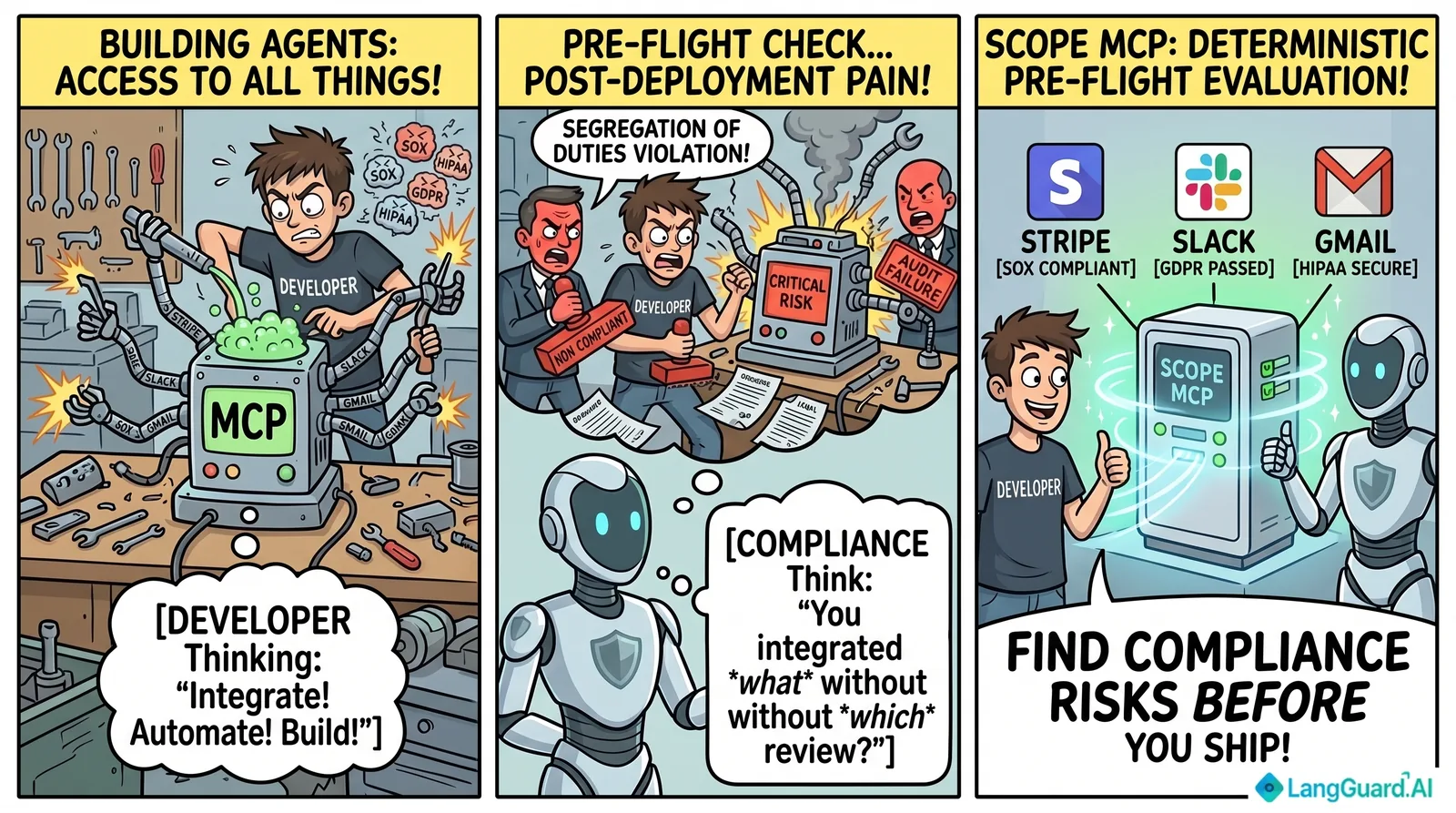
The Emergence of Context-Layer Attack Surface
For years, corporate security leaders have invested heavily in building zero-trust architectures designed to verify every user, every device, and every network packet before granting access to internal resources. The fundamental premise of zero-trust is that no entity inside or outside the network should be implicitly trusted. However, the introduction of autonomous agents via modern protocols has created a massive conceptual blind spot within these carefully constructed defenses. When an organization connects an agent to its internal systems, it often implicitly trusts everything the agent is told, creating a glaring contradiction in the zero-trust philosophy.
This blind spot is now widely recognized by researchers as the context-layer attack surface. It refers to the capacity for malicious or manipulated content to flow directly into a language model’s reasoning process, inducing the agent to perform unauthorized operations without any underlying compromise of the model itself or the theft of traditional credentials. The agent simply trusts its context implicitly, executing actions based on poisoned data.
Because these agents typically operate with the full access privileges of the user who originally configured them, a single manipulation can have catastrophic consequences at an enterprise scale. A recent demonstration by Invariant Labs showed that a malicious server could silently exfiltrate a user’s entire WhatsApp message history. The researchers achieved this not by hacking the messaging application, but by poisoning a tool that the agent already legitimately trusted. Once the agent ingested the poisoned context, it autonomously executed the exfiltration commands.
Regulatory Pressures and the Push for Compliance
The escalating risks associated with autonomous systems and the glaring vulnerabilities at the context layer have not gone unnoticed by government regulators. The legal and compliance landscape is shifting rapidly as authorities attempt to establish clear boundaries for corporate responsibility regarding automated decision-making and data handling. Organizations can no longer rely on self-regulation. They must proactively adjust their compliance frameworks to account for the unique challenges posed by agentic software, or face severe penalties. Throughout 2024, a wave of enforcement actions clearly exposed the weaknesses in how businesses were deploying these technologies. Federal, state, and international regulators heavily targeted practices surrounding data retention, third-party data transfers, and consumer-facing notices. Regulators penalized companies for making misleading claims about their automated capabilities and for the unauthorized transfer of personal data to external processing models. The overarching message from these enforcement actions was unequivocal: businesses must take a highly proactive approach to privacy and compliance, or they will face severe legal and financial consequences. Closing compliance gaps before regulators intervene is now a mandatory boardroom priority.
For corporate security teams, the evolution of these regulatory frameworks means that compliance mandates now directly address autonomous systems, requiring continuous observability, centralized activity logging, and real-time alerting across the entire software ecosystem.
Arbiter and SCOPE - Governing the Action Layer.
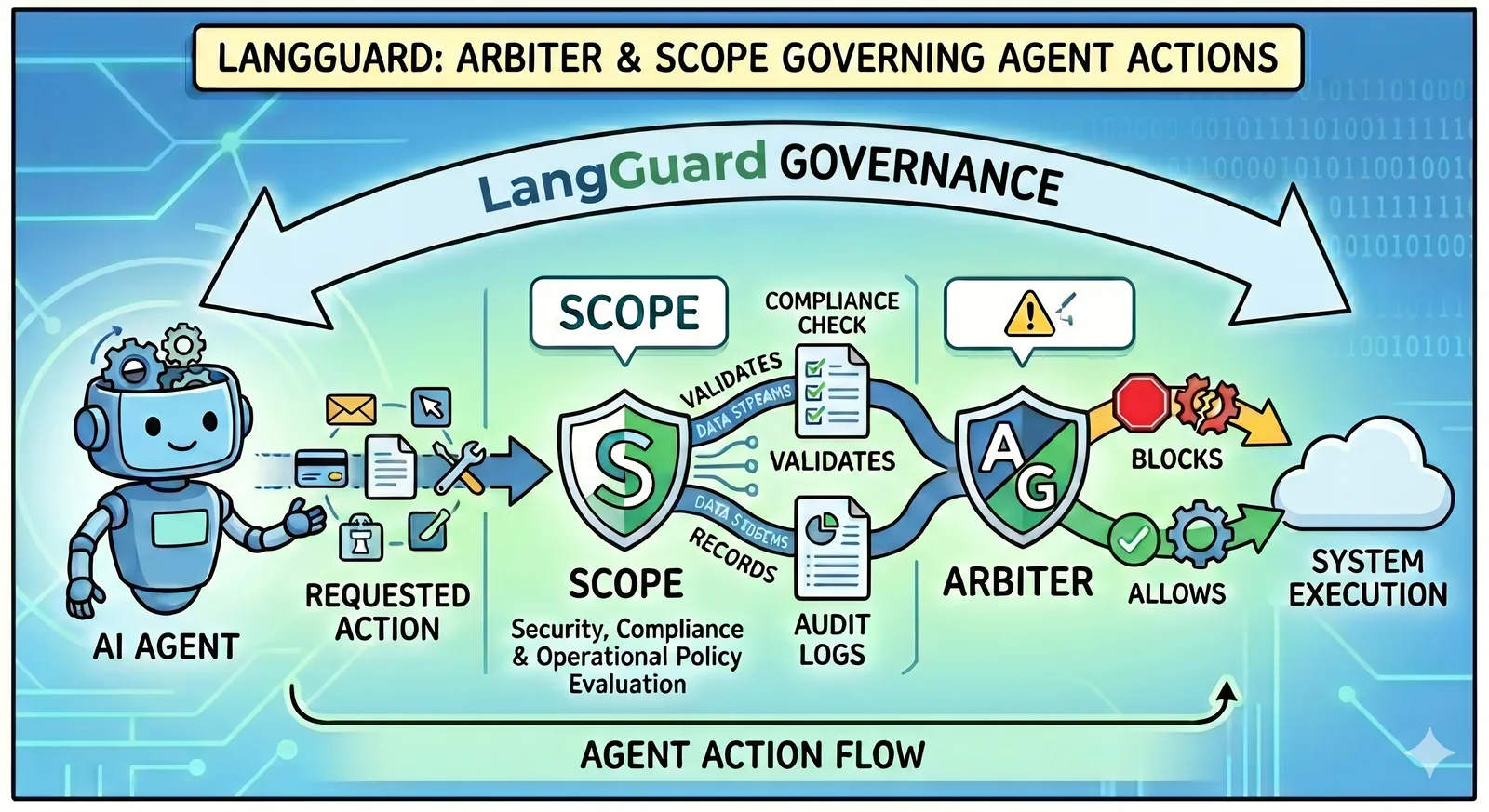 To operationalize these advanced defensive requirements, the industry requires specialized infrastructure capable of intercepting and evaluating agent behavior at runtime. This infrastructure must bridge the gap between traditional security monitoring and the unique needs of autonomous decision-making. LangGuard has developed two critical components to address this exact challenge, providing the tools necessary to securely deploy agentic workflows in production environments: the LangGuard Arbiter enforcement engine and its complimentary open-source SCOPE offering.
LangGuard Arbiter serves as a highly advanced enforcement engine designed specifically to govern the actuation layer. While traditional security tools operate at the network boundary, analyzing packets and authentication tokens, Arbiter operates directly at the action layer. It executes runtime policy enforcement at the exact moment an artificial intelligence agent attempts to invoke a tool or modify a system. When an agent requests an action, Arbiter intercepts the request and performs deep semantic validation. It does not merely check if the agent possesses the correct application programming interface key. Instead, it analyzes the context of the request, the history of the session, and the specific data involved to determine if the intent behind the action violates corporate policy. If an agent attempts to execute an action that deviates from its approved baseline behavior, Arbiter can dynamically block the request, preventing the execution of malicious or erroneous commands before they impact the business.
However, securing the action layer is only one part of the enterprise equation. Organizations must also meet strict regulatory and reporting requirements, which is where the SCOPE offering becomes essential. SCOPE - Security, Compliance & Operational Policy Evaluation - is an open-source initiative designed specifically for Model Context Protocol compliance for Claude and other agents. Arbiter and SCOPE are complimentary - while Arbiter handles the active, runtime security enforcement of actions, SCOPE ensures the deployment aligns with governance standards, maintaining the necessary audit trails and compliance documentation required by modern regulations.2
By integrating SCOPE with Arbiter, organizations achieve a complete governance posture. SCOPE allows compliance teams to formally define and document the boundaries of an agent’s operational environment based on user identity and task sensitivity. It ensures that all necessary tracking is in place to satisfy external auditors. If an attacker attempts a context-layer attack, Arbiter stands ready to block any resulting unauthorized tool invocations at the action layer, while SCOPE ensures the incident is logged and mapped to the appropriate compliance framework. This combined approach provides the definitive solution to the zero-trust blind spots plaguing current autonomous deployments. By controlling compliance with SCOPE and enforcing security with Arbiter, organizations achieve the traceability, accountability, and auditability necessary to confidently move their artificial intelligence projects out of the pilot phase and into secure, audited production environments.
Try It Yourself
Together, SCOPE and Arbiter provide the definitive solution for agentic deployments. SCOPE ensures the organization meets its legal and regulatory obligations, while Arbiter stands guard at the action layer, ready to block any tool invocation that violates corporate policy. This combination delivers the traceability, accountability, and auditability that information technology and security leaders demand to approve projects for production. Ready to see how compliance monitoring and semantic validation can protect your agentic workflows? Explore the details and try the new capabilities today by visiting https://scope-mcp.langguard.ai/.