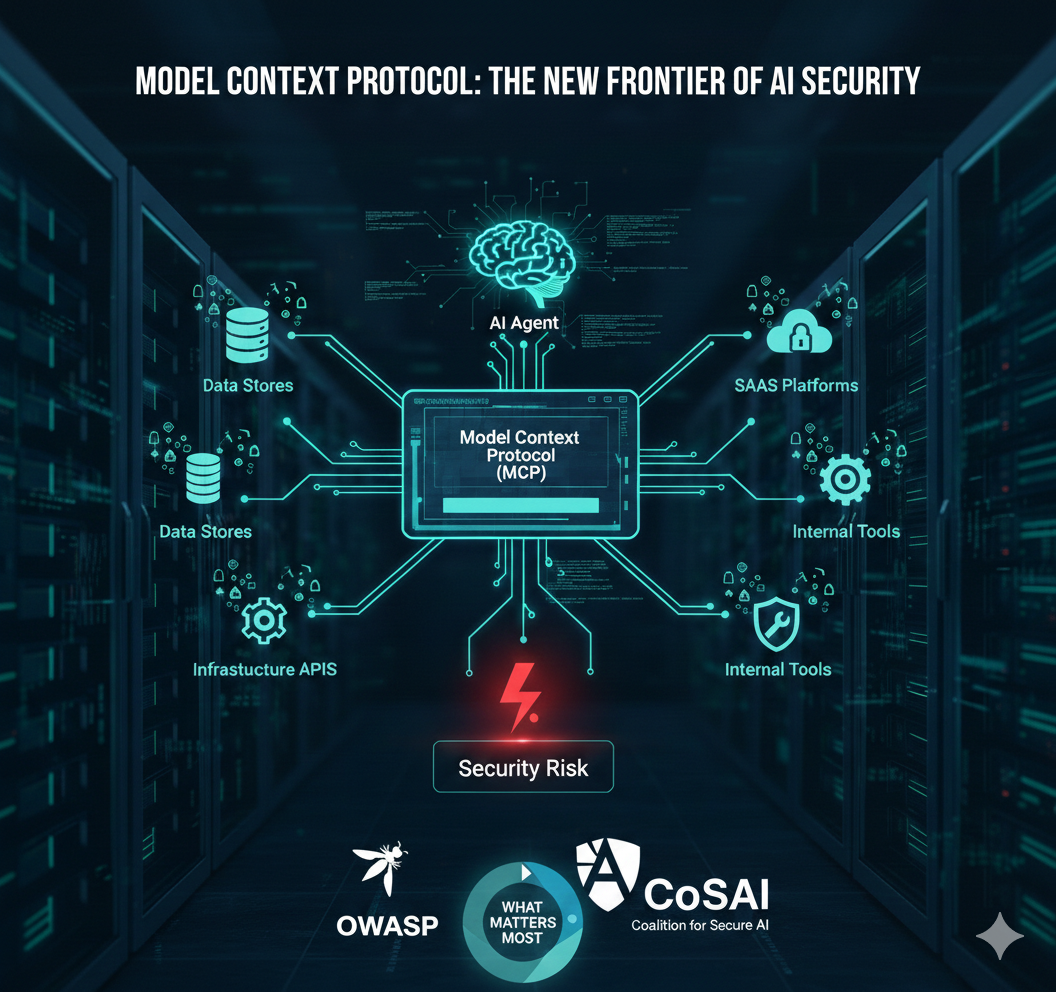
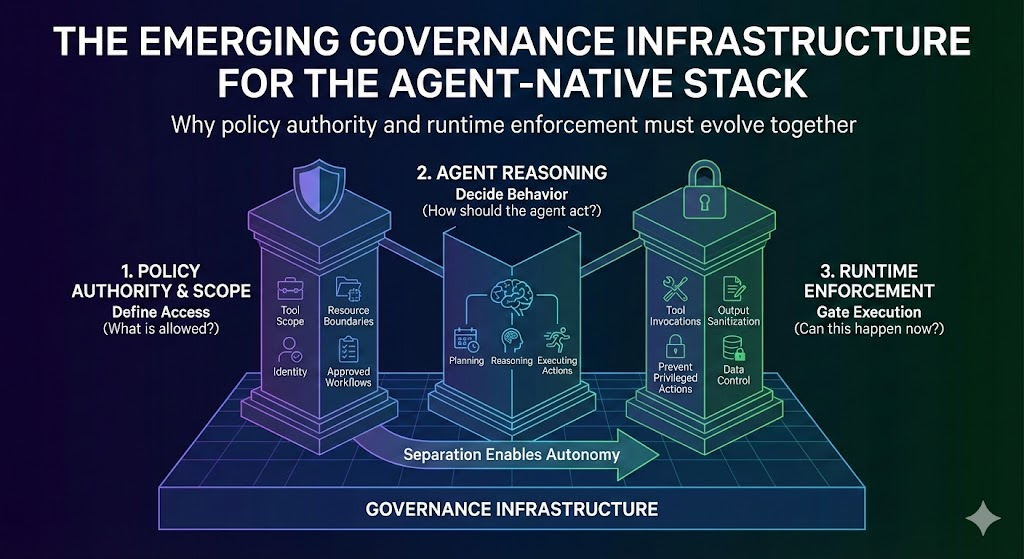
Model Context Protocol (MCP) is quickly becoming the connective tissue between AI agents and the enterprise. What began as a simple way to expose tools and data to models is evolving into a de-facto execution layer for agentic systems. As MCP servers proliferate across internal tools, SaaS platforms, data stores, and infrastructure APIs, they quietly accumulate authority: the ability to read sensitive data, invoke workflows, and take real-world actions at runtime. This creates a new class of security risk - not because MCP is flawed, but because it fundamentally shifts where trust, identity, and control live in AI systems. MCP sprawl is inevitable. What’s optional is whether organizations are prepared for it. To understand the real risks, we draw on guidance from two world-class institutions: OWASP and the Coalition for Secure AI (CoSAI). Each approaches MCP security from a different angle, and the overlap between them reveals what matters most. Two Complementary Views on MCP Security OWASP and CoSAI arrive at MCP security from distinct but complementary lenses: OWASP approaches MCP security as a lifecycle problem for MCP-enabled systems - focusing on exploitability, agent behavior, prompt and context handling, tool schemas, and dependency risk. Its Top 10 reflects what developers are most likely to build, ship, and accidentally expose. CoSAI approaches MCP from an enterprise security and safety perspective - emphasizing identity, trust boundaries, protocol and transport security, supply-chain integrity, and system-level controls for large-scale agent deployments. Where these perspectives overlap, you see consensus risks - the issues most likely to surface first and cause real damage as MCP adoption accelerates. Overlapping Threats: The Highest-Priority Risks When both OWASP and CoSAI independently flag the same issues, those risks should be treated as default security requirements, not advanced hardening. Identity, Authentication, and Authorization OWASP (MCP01, MCP02, MCP07) and CoSAI (MCP-T1, T2, T9) converge strongly here. MCP turns tools into runtime authorities. If identity, tokens, or scopes are misconfigured, agents don’t just read data - they act. Token leakage, improper delegation, and privilege creep become systemic failures rather than edge cases. Implications IT & Security: MCP servers must be treated as first-class IAM objects with lifecycle management, revocation, and audit. Prompt, Instruction, and Context Injection OWASP (MCP03, MCP06, MCP10) aligns closely with CoSAI’s MCP-T4. MCP collapses the boundary between data and instructions. Retrieved context, tool schemas, and shared memory can directly influence execution, making prompt injection, schema poisoning, tool poisoning, and context manipulation first-order risks. Implications IT & Security: Treat MCP resources and tool definitions as executable inputs, not passive data. Supply Chain Risk and Shadow MCP Servers OWASP (MCP04, MCP09) and CoSAI (MCP-T6, T11) converge on lifecycle and supply-chain concerns. MCP servers are lightweight, easy to deploy, and easy to bypass centralized review - classic shadow IT, but with execution power. OWASP emphasizes dependency tampering across SDKs, plugins, manifests, and images, while CoSAI frames the same risk through enterprise supply-chain integrity. Implications IT & Security: Discovery, inventory, and provenance of MCP servers are table stakes. Observability, Logging, and Auditability OWASP (MCP08) maps directly to CoSAI (MCP-T12). MCP failures rarely look like crashes. They look like plausible but wrong actions - which makes semantic visibility essential. Implications IT & Security: You need replayability - who invoked which MCP server, with what context, and why. Product Engineering: Debuggability and auditability must be designed in from day one. Input Validation and Command Execution OWASP (MCP05) aligns with CoSAI (MCP-T3), and becomes more dangerous when combined with instruction-boundary failures (MCP-T4). MCP tools often bridge directly to file systems, shells, APIs, and infrastructure. Inputs generated by agents are still untrusted inputs. Implications IT & Security: MCP servers effectively act as privileged automation endpoints. Product Engineering: Treat every MCP argument as hostile - even when generated by a model. Key Takeaway on Overlap If both OWASP and CoSAI flag a risk, assume: This will break first - and it will break loudly. Non-Overlapping Threats: What Each Lens Reveals The differences between OWASP and CoSAI are just as instructive. They show what each organization optimizes for - and what teams often overlook. Where CoSAI Goes Deeper: System-Level Risks CoSAI uniquely emphasizes network isolation, transport security (MCP-T7, T8), and resource exhaustion or cost abuse (MCP-T10). This reflects an enterprise reality: agentic systems often fail economically or operationally before they fail functionally. Implications IT & Security: Zero-trust assumptions, segmentation, rate limits, and quotas are core security controls. Where OWASP Goes Deeper: Developer Reality OWASP is more explicit about token handling, tool poisoning (especially schema poisoning), and dependency risk. Secrets leak through logs and examples. Tools are trusted implicitly. Dependencies move faster than reviews. Implications IT & Security: MCP tokens deserve the same rigor as cloud credentials. The Unifying Insight OWASP highlights what developers are most likely to ship. CoSAI highlights what enterprises will ultimately be held accountable for. Together, they point to a simple conclusion: MCP servers are runtime authorities. Securing MCP isn’t about checking boxes - it’s about governing how authority is created, delegated, observed, and revoked in agentic systems.